Tag Archives: pedagogy

approaches to teaching and learning

New course alert!

Excited to be developing a new fully online special topic paper for the UoA #clined programme on advanced elearning in clinical education. This paper intends to amalgamate the lessons learnt from remote teaching/learning during #covid19pandemic, with more established and tested means of technology integration in clinical teaching. There are so many reasons why the timing is opportune. A curriculum framework transformation is underway at the university, #pivotonline has surfaced promising options to interact and engage with students flexibly and the best way to appreciate learning online is to step into an online learner’s shoe. Not all changes implemented during #pivotonline may be suitable in perpetuity but there are aspects of online learning that might enable useful pedagogical shift in medical education.

What remains to be seen is whether COVID-19 provided the experience, vision and courage for medical education to change, or whether the old barriers will rise again when the pandemic is over.

Binks et al., 2021

Keeping the learner front and centre

Research collaboration between the University of Auckland, Waikato University, Canterbury University, Auckland University of Technology and Massey University (Ethics reference: FEDU036/20)

Whether we like it or not, universities are “going online” in response to COVID-19. Those of us working in the area of educational technologies might have been hoping for such a shift in contemporary higher education but no one anticipated such unprecedented change in such a short time. Organisations like EDUCAUSE emphasize the difference between carefully planned online learning experiences and courses offered online in response to a crisis or disaster (Hodges et al 2020). Students are facing multiple demands (many of which will persist) in the current context – e.g. access, financial, experience and orientation to learning online, motivation and diminished interaction with peers.
Emergent literature tends to be written from a teacher/lecturer point of view, focusing on how to make a rapid shift to online learning, and how to teach online. Missing from this literature is nuanced consideration of student perspectives. How teachers teach online, and how students experience and learn online can be poles apart (Forbes & Gedera, 2019), necessitating explicit attention to how students experience online teaching and learning. In particular, online students may engage in different ways (Brown et al, 2019).
As a team of educators interested in digital literacy and inclusive learning, we have embarked on a research project to learn from NZ university students’ perspectives and experiences of online learning during covid19. This project will fill the gap in current literature, emerging from US and the UK.

References

Brown, C., Davis, N., Eulatth-Vidal, W. (2019). Student engagement in flexible and distance learning in Aotearoa New Zealand. In A. Kamp (Ed). Education Studies in Aotearoa: Key disciplines and emerging directions. NZCER.
Forbes, D. L., & Gedera, D. S. P. (2019). From confounded to common ground: misunderstandings between tertiary teachers and students in online discussions. Australasian Journal of Educational Technology, 35(4), 1–13. https://doi.org/10.14742/ajet.3595
Hodges, C., Moore, S., Lockee, B., Trust, T & Bond, A. (2020) The Difference Between Emergency Remote Teaching and Online Learning. Educause Review https://tinyurl.com/rekxcrq


Lets be critical: Re-examining technology affordances and digital literacies for professional education

A recent article by Smith, Kahlke and Judd (2020), reminds me of how almost a decade ago now, a colleague and I created an engaging learning design for a competency based programme: combining technology affordances, pedgagogy and digital literacy. We went the extra mile in planning and designing for the proper integration and use of technologies in the Pharmacy Practice programme, without making any assumptions about students’ digital literacy. Our approach (see Datt & Aspden, 2011) was based on the contributing elements of design for socio-constructivist learning environments: authenticity, motivation, scaffolding and skills development. We too focused on “two key questions: (1) what affordances are offered by a given technology that will support learners in developing their professional competencies, and (2) what broad range of knowledge and skills do learners require in order to effectively integrate a technology in their learning and practice?” (Smith et al., 2020, p.6)

Continue reading

Curse of technology? More reflection on ACADPRAC 703

Apart from all the enrollment concerns, I have begun to feel that most of the students are yet to feel confident online. At least one of them is fully engaged (having completed their student page!) and raring to go while the rest are very cautious. It is hard to find the balance between catering to the needs of the very active and those who are lurking not because they don’t want to engage but just haven’t found the confidence to put their thoughts out there. A good last minute teaching strategy for me was to hold back the summary of topic 1 until all students have had a go at the readings and have posted a response to the online activity. Have decided to publish the announcements using the comments feature as it is auto subscribed. There was bit of a drama over where it should appear on the site and whether the comments bubble should be active when it is on the homepage. We tried to suppress the bubble but realised that the ajax code does not behave and the like button disappears after the first person has used it! Now, a dedicated page called announcements has been created and that has the full comment feature.

First reflections on the new ACADPRAC 703

Off to a ‘not so great’ start as there are many enrollments issues to be sorted. However, considering the class sizes I have had before, 2 being the minimum, I think having 5-8 people this time is a real bonus. Panic has set in over student pages as I have realised there are glitches in the system that allow student editors to see the hidden pages. Though they cannot edit or see the content-which is displayed as work in progress- I feel it is not a professional look. Also, linking to unpublished sites in image map makes it go to edit view where access is compromised for hidden content. Answered the first student query as I did not have access to the right CECIL instance of the course, I couldn’t see the students enrolled. Then there was the palaver over enrollment caps, ACADPRAC 703 somehow had a capacity for 5 students on SSO which isn’t correct at all. If anything there could be 50 students which I rightly pointed out to admin and they realised it was a typo!

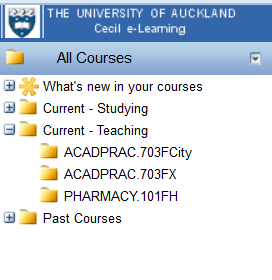
This confusion between ACADPRAC 703F City 2014 and ACADPRAC 703FX 2014 certainly exists and needs to remedied through CECIL admin. I finally got access to the correct course.
Design aspirations:
>> interactive course with focus on peer-peer communication and collaboration.
>> input from students to negotiate the assessment 2 format and timing.
>> clear guidelines on what is required and what is desirable but not essential e.g. links to Fellowship and CLeaR Lights programme.
>> information to lead into further exploration and personalisation of the learning experience.
>> journal for student reflections, collaborative glossary and student pages to create an online presence

Continue reading