Tag Archives: inclusive

universal design

Academic life: finding the balance

This is a reflective post on the concept of balance (wellbeing and productivity) introduced in ACADPRAC 702: Academic Citizenship (PGCert Academic Practice).

“…for students it would be better to be clear about the purpose of what they are studying and identifying the high-priority areas rather than simply reading more or reorganising their notes” (p244). Who would dare tell this to their students? Aren’t we in the process of churning out mass graduates to keep our revenue lines healthy?

Kearns & Gardiner (2007)

Is it time well spent? The relationship between time management behaviours, perceived effectiveness and work related morale and distress in a university context (Kearns & Gardiner, 2007)
I really liked this paper and have already started thinking about how I can get onto my PhD without further procrastination! Procrastination is considered a “bad habit” (p236). The standout value of this paper was the fact that they had given student life some consideration and balanced the view on workloads by comparing students and teachers alike. “Today’s students will tell you that, with demands of lectures, study… there is barely any time for life” (p236). However, what intrigued me most was the behaviour that they prioritised most ‘having a clear purpose in your career’. I am sure, early career academics would agree with me that in the early days, irrespective of the focus and sense of purpose one has, it comes down to sink or swim and time management becomes an unknown issue. I also thought that being organised was an all-encompassing behaviour rather than something at the bottom of the pyramid. For example, for me planning and prioritising is part of being organised.
Continue reading

Joining the dots: networking, capacity and policy

While thinking about the PhD – value of networks in developing capacity – I explore the key features of our university policy on staff professional development and how it relates to academic citizenship.

University is committed to providing its academic staff with the opportunity to become excellent teachers and leading scholars and researchers in their fields, and to developing their managerial, leadership and technical abilities. One of the applied principles is that orientation and induction; mentoring; training as a lecturer/tutor; training for academic heads; and development in academic leadership, are important for the development of good practice. Professional development includes: technical skill development to help academic staff to teach or research more effectively; mentoring to provide staff with advice and support and a sounding board for self-review and appraisal; and work culture development.

Continue reading

Generation “MySpace”

Social networking and its impact on students and education

This was my first overseas seminar since joining the University of Auckland as an academic in Technology Enhanced Learning. The seminar – focused on social networking – began with Dr. Dahle Suggett raising important issues around social networking and its impact on the social and emotional wellbeing of our youth. According to him, social networking begins a new era of cultural management where it becomes essential for educators and school administrators to plan the management of the social aspects of technologies. Many schools and universities end up blocking the access to tools such as ‘YouTube’ and ‘MySpace’. Is this the right approach? How do schools respond to students’ use of advanced technologies?

Affordances of Web 2.0

Keynote by danah boyd
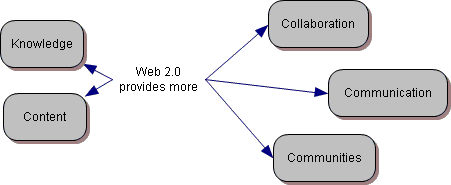
Networked publics concept began with the inception of Usenet in 1979. Web 2.0 has provided more opportunity for networking in the public sphere with the use of modern social networking tools.

Continue reading

eTools for assessment and feedback

Massey University academics present on essay type assessment marking. Their research indicates that:
Lecturers prefer to mark assignments on paper rather than on screen depending on the type of assignments. For especially long essays, paper based reading and marking is preferred.
Specialist software such as Electronic feedback, Grademark, WebCT connect, MarkTool, Creative technology-Markin, Markers assistant, Penmarked or basic tools such as Track changes function on Microsoft Word were being used by some lecturers to mark assignments electronically.
Feedback was the most important aspect of assignments. Comment banks could be developed to provide detailed feedback for each of the assignments.

Good feedback practice (Nicol & Macfarlane‐Dick, 2006):
1. helps clarify what good performance is (goals, criteria, expected standards);
2. facilitates the development of self-assessment (reflection) in learning;
3. delivers high quality information to students about their learning;
4. encourages teacher and peer dialogue around learning;
5. encourages positive motivational beliefs and self-esteem;
6. provides opportunities to close the gap between current and desired performance;
7. provides information to teachers that can be used to help shape teaching.

Continue reading

Good teaching in large classes

In this seminar, experienced teachers of large classes shared their strategies for keeping their classes active and engaging. It’s not about the tools, but how you use them to meet the needs of your learners, staying true to your teaching approach.

References:

McKeachie, W. (1980). Improving lectures by understanding students’ information processing. In McKeachie, W.J. (Ed.), Learning, Cognition, and College Teaching. New Directions for Teaching and Learning, No. 2. San Francisco: Jossey-Bass Publishers.
Learning spaces e-book by EDUCAUSE
Good, M. (2001). On the Way to Online Pedagogy (Chapter 13) in John Stephenson (ed.). Teaching and Learning Online: Pedagogies for New Technologies. [Online]
Lyman, F. (1981). The Responsive Class Discussion. In A. S. Anderson (ed.), Mainstreaming Digest. College Park: College of Education, University of Maryland, 1981. (Think-pair-share technique)
Thiagi, S. (2005). Thiagi’s Interactive lectures: Power up your training with interative games and exercises. USA: ASTD Press.
George Brown (1978). Lecturing and Explaining. London: Methuen. (Peer squares-peer assessment technique)
Shenk, D. (1997) Data Smog: Surviving the Information Glut, San Francisco: HarperCollins.  

Continue reading