
Tag Archives: inclusive

universal design

Keeping the learner front and centre

Research collaboration between the University of Auckland, Waikato University, Canterbury University, Auckland University of Technology and Massey University (Ethics reference: FEDU036/20)

Whether we like it or not, universities are “going online” in response to COVID-19. Those of us working in the area of educational technologies might have been hoping for such a shift in contemporary higher education but no one anticipated such unprecedented change in such a short time. Organisations like EDUCAUSE emphasize the difference between carefully planned online learning experiences and courses offered online in response to a crisis or disaster (Hodges et al 2020). Students are facing multiple demands (many of which will persist) in the current context – e.g. access, financial, experience and orientation to learning online, motivation and diminished interaction with peers.
Emergent literature tends to be written from a teacher/lecturer point of view, focusing on how to make a rapid shift to online learning, and how to teach online. Missing from this literature is nuanced consideration of student perspectives. How teachers teach online, and how students experience and learn online can be poles apart (Forbes & Gedera, 2019), necessitating explicit attention to how students experience online teaching and learning. In particular, online students may engage in different ways (Brown et al, 2019).
As a team of educators interested in digital literacy and inclusive learning, we have embarked on a research project to learn from NZ university students’ perspectives and experiences of online learning during covid19. This project will fill the gap in current literature, emerging from US and the UK.

References

Brown, C., Davis, N., Eulatth-Vidal, W. (2019). Student engagement in flexible and distance learning in Aotearoa New Zealand. In A. Kamp (Ed). Education Studies in Aotearoa: Key disciplines and emerging directions. NZCER.
Forbes, D. L., & Gedera, D. S. P. (2019). From confounded to common ground: misunderstandings between tertiary teachers and students in online discussions. Australasian Journal of Educational Technology, 35(4), 1–13. https://doi.org/10.14742/ajet.3595
Hodges, C., Moore, S., Lockee, B., Trust, T & Bond, A. (2020) The Difference Between Emergency Remote Teaching and Online Learning. Educause Review https://tinyurl.com/rekxcrq
ITEL: inclusive technology enhanced learning

Related project: Technology for equitable learning opportunities and design
(Learning Enhancement Grant 2019-2020)

Top 10 issues in higher education in 2019 (EDUCAUSE)

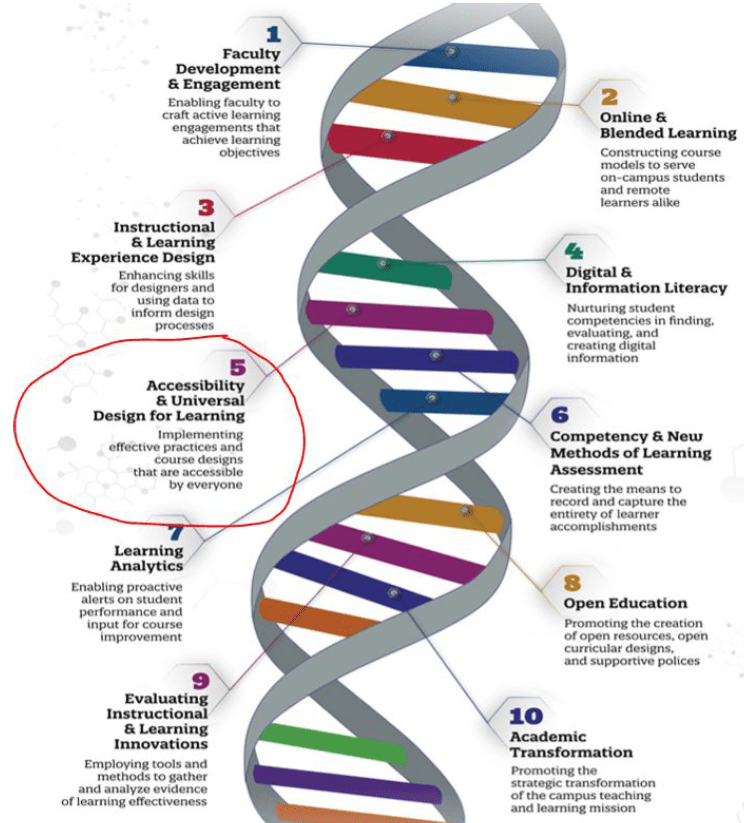
What can technology do to create barriers to learning? Seems like plenty… EDUCAUSE in its 2019 elearning initiative, identified accessibility and Universal Design for Learning (UDL) as a key teaching and learning issue. Our presentation (2019 Scholarship of Technology Enhanced Learning conference) on the core consideration for inclusivity in design – audience, tools, content and legislation – opened up some interesting discussions. Many at times we make assumptions about our learners and their digital skills; accessibility and usability of tools; content creation quailty (re-packaging rather than re-purposing) and the law (accessibility standards). How can we ensure that our learning designs and content facilitation through technology offers equitable learning experiences? 

What do our learners find useful?

Even though students in Australia and New Zealand report high levels of digital activity than UK students, they agree that technology can have negative impacts on their studies. Unless designed well and integrated into the core learning outcomes, these learners rather not have digital technologies used in their courses (Beetham, Newman & Knight, 2019).

What tools are useful?

The use of digital technologies don’t always lead to creative, collaborative, participatory and hyper-connected practices. Henderson, Selwyn and Aston (2017) indicate that rather these are the activities, practices and processes that students feel compelled to undertake in order to ‘do’ university.

...many of the reportedly ‘educational’ benefits of digital technology…are more accurately described as concerned with the ‘logistics’ of university study rather than matters related directly to ‘learning’ per se.

Henderson, Selwyn & Aston (2017)

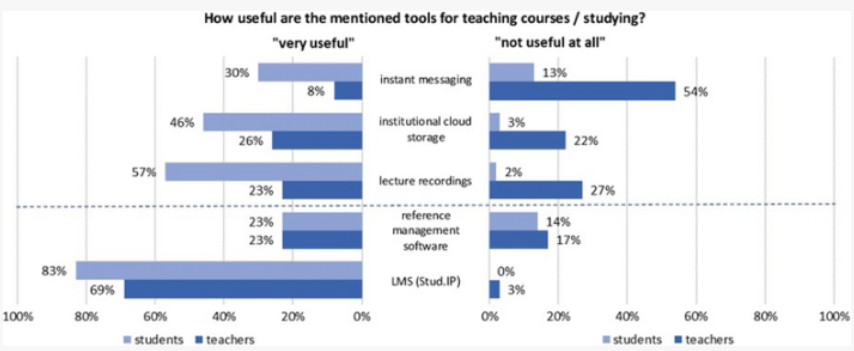
Bond, Marín, Dolch, et al. (2018) reported differences in how learners and teachers perceive the usefulness of tools such as lecture recordings, the learning management system (LMS) and reference management systems. For example, close to a quarter of all teachers they researched, thought lecture recordings were not useful but close to 50% of the students found them useful.

Comparison of teaching and learning tools (Bond, Marín, Dolch, et al. (2018)

What guidelines apply for accessible and intuitive content development?

Web content accessibility guidelines (WCAG 2.1/W3C)
European Union accessibility act
Web accessibility guidelines (Australia)
Proposed changes to web standards (New Zealand)

TEL tests the seasoned

I recently presented at the International Society for the Scholarship of Teaching and Learning (ISSOTL) and Tertiary Education Research New Zealand (TERNZ) conferences on my experience with connectivist, massive open online courses (MOOCs). The experiment with setting up and facilitating a mini open online component (mooc) of a course turned into a “connectivist disconnect.”

References:

Datt, A. (2014)The Connectivist Disconnect. Paper presented at Tertiary Education Research in New Zealand (TERNZ), Auckland, New Zealand. 26 November – 28 November 2014. [Online]
Datt, A. K. (2014)Casting a connectivist stone to generate networking ripples-cMOOCs and elearning professional development. Paper presented at International Society for the Scholarship of Teaching and Learning Conference, Quebec City, Canada. 22 October – 25 October 2014. Nurturing Passion and Creativity in Teaching and Learning. [Online]

Continue reading

Connections: MOOCs, CoPs and the conversational framework

How can the conversational framework influence the design of a cMOOC? Can a cMOOC be an advantage for elearning professional development? Can rethinking the classroom in the digital age be a good example of a cMOOC where the aim is to provide access, increase flexibility while supporting the development of a community of practice where ideas and experiences are shared among individuals who may maintain contact beyond the course. This will be the focus of my design of the mooc on rethinking the classroom-every aspect of the course will be largely dependent on the connection and communications on the course. The Personal Knowledge Management (PKM) skills model will still come in handy as there needs to be initiative and motivation for enrolling and maintaining a presence in the course…

Curse of technology? More reflection on ACADPRAC 703

Apart from all the enrollment concerns, I have begun to feel that most of the students are yet to feel confident online. At least one of them is fully engaged (having completed their student page!) and raring to go while the rest are very cautious. It is hard to find the balance between catering to the needs of the very active and those who are lurking not because they don’t want to engage but just haven’t found the confidence to put their thoughts out there. A good last minute teaching strategy for me was to hold back the summary of topic 1 until all students have had a go at the readings and have posted a response to the online activity. Have decided to publish the announcements using the comments feature as it is auto subscribed. There was bit of a drama over where it should appear on the site and whether the comments bubble should be active when it is on the homepage. We tried to suppress the bubble but realised that the ajax code does not behave and the like button disappears after the first person has used it! Now, a dedicated page called announcements has been created and that has the full comment feature.