Facilitation is key to the success of discussion based activites. Examples shared here showcase a number of strategies such as peer, networked, independent and moderated learning. Important lessons are: make expectations clear, align OADs to assessment tasks (preferrably formative), develop/use an e-moderation model (distinguish teacher and learner roles) and establish ground rules for online etiquette.
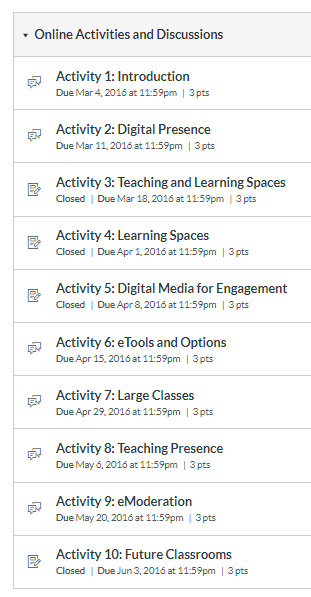
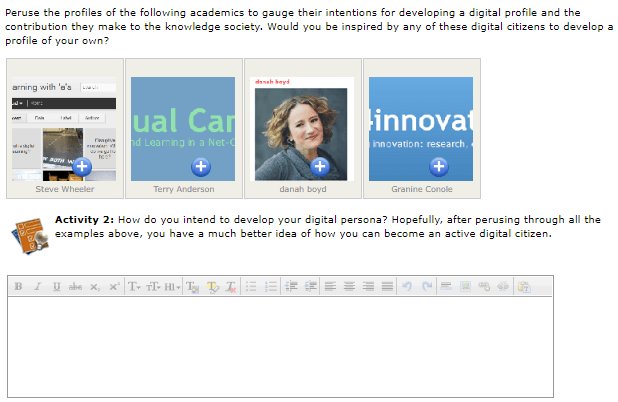
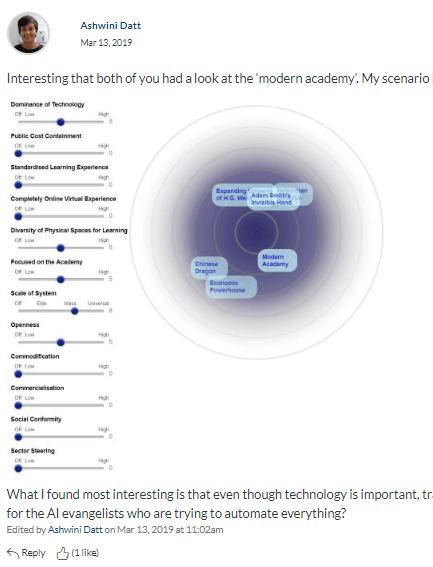
From experience of participating in, and moderating online asynchronous discussions (OADs), the appeal of text-based communication in contemporary education is because:
(1). It requires less bandwidth compared to communication using other media.
(2). The asynchronous nature reduces pressure and anxiety around participation by giving discussants time to think through their post.
(3). Learners can be networked and supported through peer learning, relieving some pressure of moderation from educators.
(4). Written contributions make collaborative efforts more explicit, useful for assessed work.
A powerful constructivist tool, once pivotal to mainstream distance learning, OADs became prominent in other modes of learning due to the work of Garrison, Anderson and Archer (2000). Their research into effective facilitation of OADs adapted the Community of Inquiry (CoI) model for teacher, social and content presence. Best practice and inspiration for OADs were also shared via a dedicated journal.
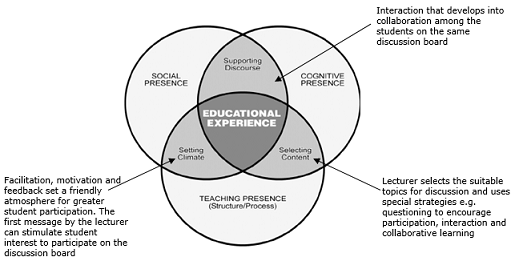
Image adapted from Garrison, n.d.
For further reference:
Datt, A. K. (2017). Networking Learners Using Online Asynchronous Discussions. In M. Northcote (Ed.) Handbook of Research on Humanizing the Distance Learning Experience (pp. 49-77). IGI Global. 10.4018/978-1-5225-0968-4.ch003
Datt, A. K. (2007). Using online asynchronous discussions to network face to face and distance learners: patterns of participation and interaction. Unpublished Masters Thesis. University of Southern Queensland.
Garrison, D. R., Anderson, T., & Archer, W. (2000). Critical inquiry in a text-based environment: Computer conferencing in higher education. The Internet and Higher Education, 2, 87–105. doi:10.1016/S1096-7516(00)00016-6
 Ashwini Datt