Related page: Learners as cocreators of content
Assessment as, of, and for learning, give purpose and meaning to our educational experience. To be purposeful, assessments tasks should align with the objectives of the curriculum and content. Learners need to know why they are doing, what they are being asked to do and how they will be guided to achieve the outcomes expected of them. Meaningful assessment activities are authentic (have real life application), experiential (engage learners to critically think and contribute without the fear of failing) and developmental (allow learners to monitor their progress based on criteria rather then in comparison with others). Quality assessments provide variety, learner choice and feedback (see Carless 2015).
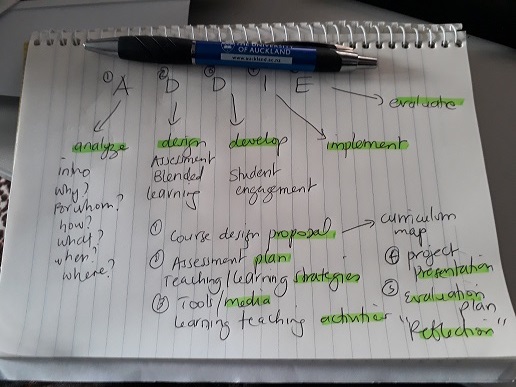
In the strategies that I have used to develop engaging and authentic assessments, you will notice variety and the use of technologies. Neither variety, nor technologies were used ‘just for the sake’. Variety was useful in multidisciplinary contexts (e.g. Digihum course – Datt, Frost, Light & Zizek, 2019) and technologies provided affordances that met a need or requirement in the assessment (e.g. Datt & Aspden, 2011).
| discipline | engagement strategy | tools |
|---|---|---|
| Religious Studies Pharmacy | Search, retrieve and use information to present on given topic | News and social media Apps for content creation |
| Philosophy | Reflect on daily engagement with technology (how and what to share on the internet) | Movie (Transcendence) Discussion forum |
| Art History | Create a virtual exhibition. Practice formal and contextual analysis using case studies | Online museum collections e.g. Rijksmuseum Content curation sites e.g. Pinterest |
| History | Source new bodies of knowledge and data visualization | Digital archives Ngram viewer |
| Medicine | Use simulations to practice decision making | Ready to Practice simulation |
| Law | Use scenarios to develop legal reasoning | Animation CourseBuilder |
| Higher Education | Various – ADDIE process for principles and practice of course design | Learning Management System (LMS) features – Discussion – Peer review |
For further reference:
Datt, A. K., Frost, J., Light, R., & Zizek, J. (2019). Designing engaging assessments for teaching the digital humanities. In E. Alqurashi (Ed.) Handbook of research on fostering student engagement with instructional technology in higher education (pp. 139-153). Hershey, PA, USA: Information Science Reference. 10.4018/978-1-7998-0119-1.ch008
Datt, A., & Aspden, T. (2015). Motivating learning and skills development in Netizens. In C. Koh (Ed.) Motivation, leadership and curriculum design: Engaging the Net Generation and 21st century learners (pp. 63-74). Singapore: Springer. 10.1007/978-981-287-230-2_6
Datt, A. K., & Aspden, T. J. (2011). Leveraging technology for engaging learning design. In G. Williams, N. Brown, M. Pittard, B. Cleland (Eds.) Ascilite 2011 : Changing demands, changing directions : Proceedings of the Australian Society for Computers in Learning in Tertiary Education Conference, 331-341. Hobart, Australia: University of Tasmania. [Online]
See also:
Carless, D. (2015). Excellence in university assessment: Learning from award-winning practice. London: Routledge.
 Ashwini Datt