Related pages: MOOCs and large courses and Blended learning
Curriulum design takes time and a mammoth effort to implement. I have developed a range of curricula, independently, in teams, for my own teaching or that of other academics’. My perspective on curriculum design is guided by experience at the University of the South Pacific (USP), which serves the diverse needs of twelve island nations. At USP, new curricula was developed in response to changing needs of the learners, discipline, practice, institution, to name a few. A year after its implementation, the curriculum is adjusted based on learner feedback, teaching evaluation and implementation issues (if any). It would then run for a further 3-5 years before being revised again, minor adjustments allowed to happen along the way. The appeal of the USP approach to me is twofold: (1) it allows for the fact that any curricula change or educational design intervention needs time to mature; and (2) iterative changes need to be made based on learner feedback (for whom?) and ongoing needs analysis (why?).
New curriculum
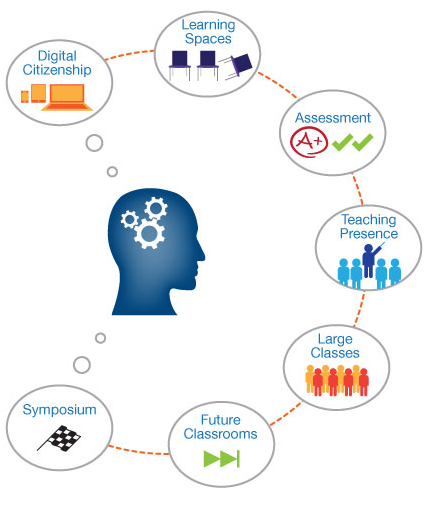
ACADPRAC 703: Digital Teaching and Learning in Higher Education.
I independently led the development and teaching of ACADPRAC 703, the only fully online paper in the PGCert Academic Practice from 2014 to 2016. The course filled an important gap in elearning at the University of Auckland. I have since repurposed the course into a mooc: a mini open online component that can be accessed and facilitated when needed.
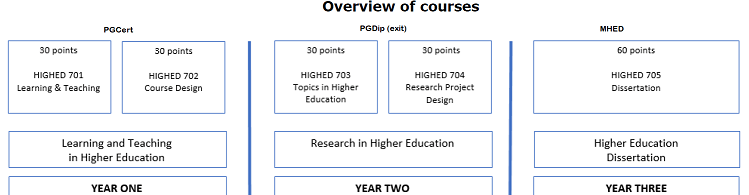
MHED: Masters in Higher Education
I was part of the development team for the new Masters qualification in Higher Education, created in response to changing demands and a review of the PGCert.
Course Design Catalyst
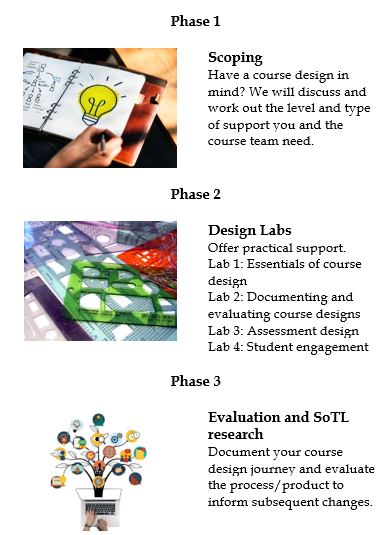
A new programme I created to scale up course/curriculum design capacity building for individuals and/or teams. Course Design Catalyst bridges the gap between the university’s Introduction to Teaching and Learning (Teaching Catalyst) and the Masters in Higher Education. It has been successfully piloted in 2019.
Similar approach was adopted for designing the new HIGHED 702: Course Design paper. The course pathway emulates the course design process. The content and assessments align with a simple model of learning design: Analysis, Design, Development, Implementation and Evaluation. Responsive design offers more formative assessments with clearer criteria, rubrics and opportunities for feedback/peer-review.
Revised curriculum
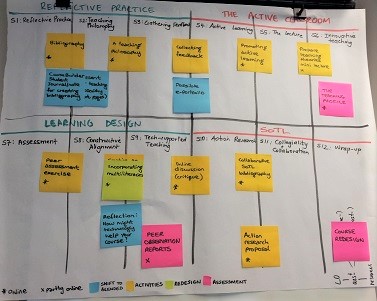
ACADPRAC 701A/B: Teaching, Learning and Assessment.
Move to blended learning led to a rethink of the interaction and assessment strategies. Core to the re-design was balancing peer and independent learning – maintaining the cohort effect online while enabling flexible access and engagement for individual academics.
Teaching Catalyst Programme
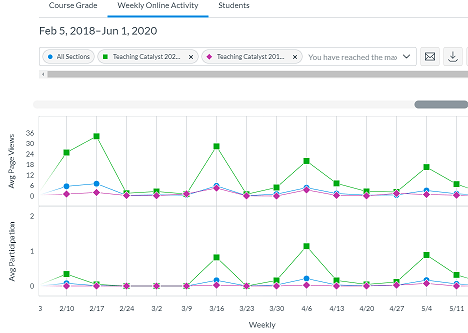
As the coordinator from S12018-S12020, I led a gradual curriculum change to: (1) adopt the theme of teaching presence; (2) blended learning; and (3) flexible online interaction and engagement for the “Documenting your Teaching” part of the Teaching Catalyst.
Digital Citizenship
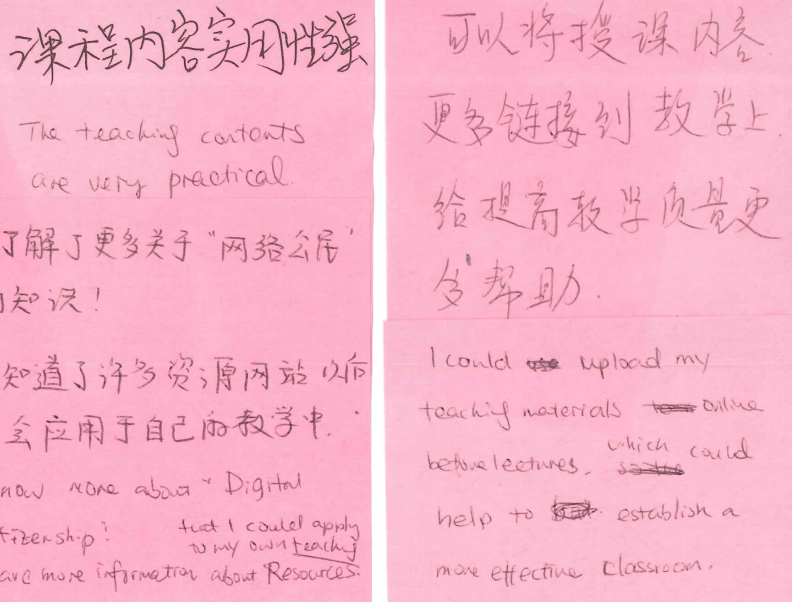
A smaller but significant curriculum change was necessary when I adapted the Digital Citizenship seminars for Chinese University academics. The impetus came from their unique context and range of educational technologies like Baidu, WeChat and RenRen.
 Ashwini Datt