Related pages: MOOCs and large courses and Curriculum design
Finding the perfect blend depends on a number of factors like context, need, resources, time etc. The three principles that I generally base my blended learning initiatives on, are:
Knowing our students
Choosing the right media and method
Developing teacher presence
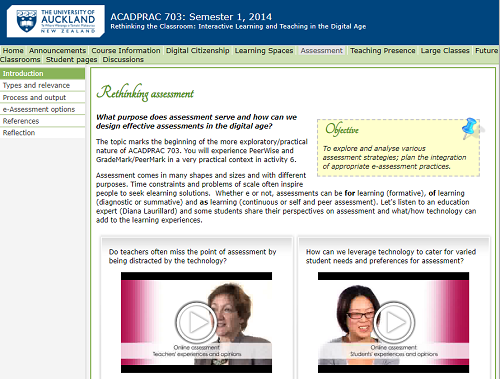
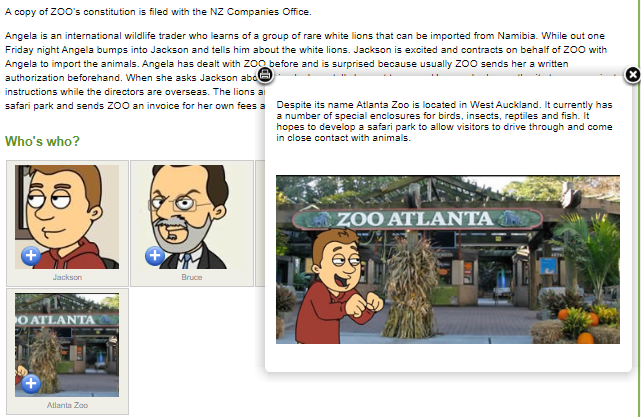
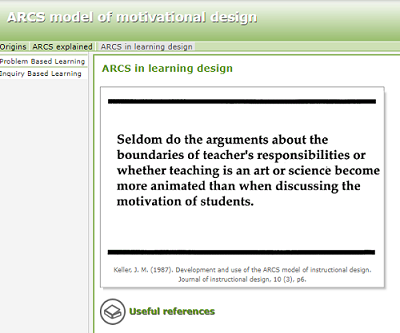
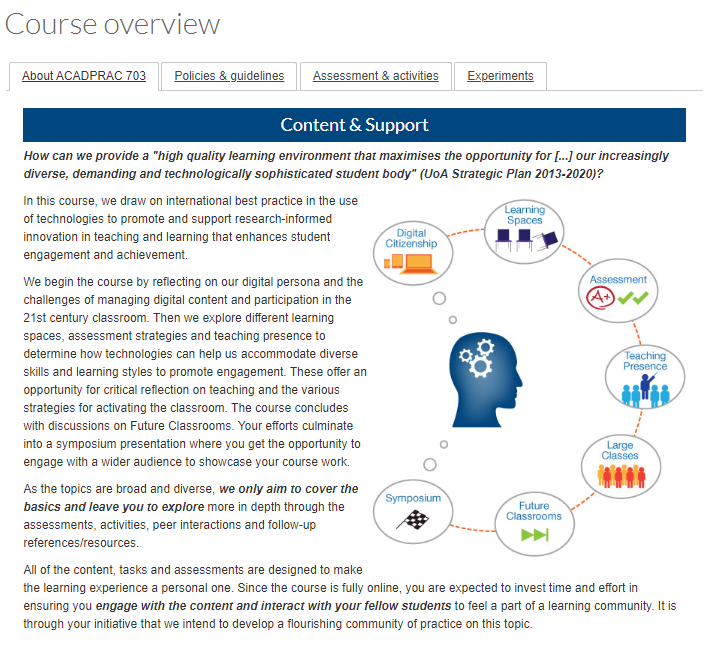
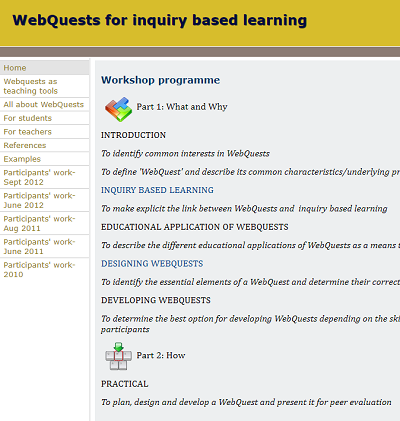
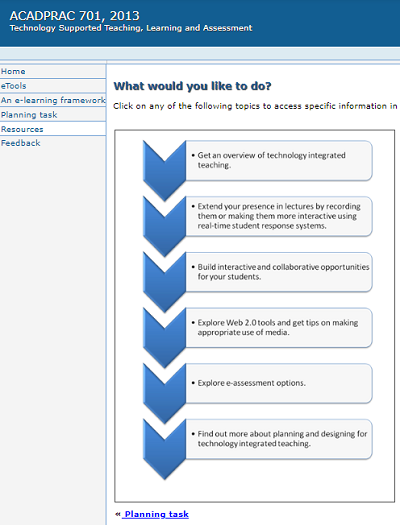
After experiencing a range of tools and strategies as in the examples here (click to enlarge images), I have become more critical of technologies that can create inadvertent barriers to learning. Nowadays, I am interested in using technology and/or blended learning to create more inclusive and equitable learning opportunities. My Learning Enhancement Grant project aims to create more awareness and guidance on inclusive and equitable learning designs.
For further reference:
Datt, A., & Wheeler, P. (2019). ITEL: Inclusiveness in Technology Enhanced Learning (TEL). Paper presented at SoTEL: Scholarship of Technology Enhanced Learning 2019, Auckland University of Technology, Auckland City, New Zealand. 14 February – 15 February 2019. [Online]
Datt, A. K. (2018). Teaching with technologies: The metamorphosing educator. Paper presented at Scholarship of Technology Enhanced Learning (SoTEL), Auckland, New Zealand. 15 February – 16 February 2018. [Online]
Willems, J., et.al (2018). Digital Equity: Not just an ‘add on’ but business as usual. In M. Campbell, J. Willem, C. Adachi, D. Blake, I. Doherty, S. Krisnan, Macfarlane, S, L. Ngo, O’Donnell M, S. Palmer (Eds.) Open Oceans: Learning without borders, 565-567. Geelong, Australia. [Online]
Carter, S., Datt, A. K., & Donald, C. (2012). The pedagogy and practice of elearning: Looking back to redirect the flow. Paper presented at 2011 Association of Tertiary Learning Advisors of Aotearoa New Zealand (ATLAANZ) Conference, Wellington Institute of Technology (WelTec). 30 November – 2 December 2011. Navigating the River: Proceedings of the 2011 Annual International Conference of the Association of Tertiary Learning Advisors of Aotearoa/New Zealand (ATLAANZ). (pp. 16). [Online]
Datt, A. K., & Aspden, T. J. (2011). Leveraging technology for engaging learning design. In G. Williams, N. Brown, M. Pittard, B. Cleland (Eds.) Ascilite 2011 : Changing demands, changing directions : Proceedings of the Australian Society for Computers in Learning in Tertiary Education Conference, 331-341. Hobart, Australia: University of Tasmania. [Online]
Datt, A., Donald, C., & Carter, S. (2011). Engaging students online: “E ako!”. MAI Review, 2011 (3). [Online]
Donald, C., Blake, A., Girault, I., Datt, A., & Ramsay, E. (2009). Approaches to learning design: past the head and the hands to the HEART of the matter. DISTANCE EDUCATION, 30 (2), 179-199. 10.1080/01587910903023181
 Ashwini Datt