Category Archives: Teaching

Higher education teaching

Curse of technology? More reflection on ACADPRAC 703

Apart from all the enrollment concerns, I have begun to feel that most of the students are yet to feel confident online. At least one of them is fully engaged (having completed their student page!) and raring to go while the rest are very cautious. It is hard to find the balance between catering to the needs of the very active and those who are lurking not because they don’t want to engage but just haven’t found the confidence to put their thoughts out there. A good last minute teaching strategy for me was to hold back the summary of topic 1 until all students have had a go at the readings and have posted a response to the online activity. Have decided to publish the announcements using the comments feature as it is auto subscribed. There was bit of a drama over where it should appear on the site and whether the comments bubble should be active when it is on the homepage. We tried to suppress the bubble but realised that the ajax code does not behave and the like button disappears after the first person has used it! Now, a dedicated page called announcements has been created and that has the full comment feature.

First reflections on the new ACADPRAC 703

Off to a ‘not so great’ start as there are many enrollments issues to be sorted. However, considering the class sizes I have had before, 2 being the minimum, I think having 5-8 people this time is a real bonus. Panic has set in over student pages as I have realised there are glitches in the system that allow student editors to see the hidden pages. Though they cannot edit or see the content-which is displayed as work in progress- I feel it is not a professional look. Also, linking to unpublished sites in image map makes it go to edit view where access is compromised for hidden content. Answered the first student query as I did not have access to the right CECIL instance of the course, I couldn’t see the students enrolled. Then there was the palaver over enrollment caps, ACADPRAC 703 somehow had a capacity for 5 students on SSO which isn’t correct at all. If anything there could be 50 students which I rightly pointed out to admin and they realised it was a typo!

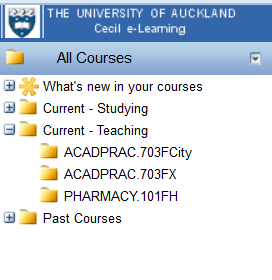
This confusion between ACADPRAC 703F City 2014 and ACADPRAC 703FX 2014 certainly exists and needs to remedied through CECIL admin. I finally got access to the correct course.
Design aspirations:
>> interactive course with focus on peer-peer communication and collaboration.
>> input from students to negotiate the assessment 2 format and timing.
>> clear guidelines on what is required and what is desirable but not essential e.g. links to Fellowship and CLeaR Lights programme.
>> information to lead into further exploration and personalisation of the learning experience.
>> journal for student reflections, collaborative glossary and student pages to create an online presence

Continue reading

Joining the dots: networking, capacity and policy

While thinking about the PhD – value of networks in developing capacity – I explore the key features of our university policy on staff professional development and how it relates to academic citizenship.

University is committed to providing its academic staff with the opportunity to become excellent teachers and leading scholars and researchers in their fields, and to developing their managerial, leadership and technical abilities. One of the applied principles is that orientation and induction; mentoring; training as a lecturer/tutor; training for academic heads; and development in academic leadership, are important for the development of good practice. Professional development includes: technical skill development to help academic staff to teach or research more effectively; mentoring to provide staff with advice and support and a sounding board for self-review and appraisal; and work culture development.

Continue reading

Writing about my teaching

A Teaching Profile focuses on the core values, signature pedagogies, personal style and beliefs in our teaching. Various ways to formulate a readable profile include the use of metaphorsillustration or drawing, lists of guiding values, attitudes or  ethicssignature pedagogies, past influential experiences and details of student expectations and achievements.

What is my Teaching Philosophy and Approach?
As an early career academic, I aspire to be an inspirational and research-informed, responsive teacher. I always think of teaching and learning design as a smart balancing act. Very much like a trapeze artist, you need to be brave and bold to take risks, and accept that one fall will potentially inflict long-term damage but recovery is possible. The whole experience is important to perfect the act, if perfection is at all possible. My teaching philosophy and aspirations are best represented by a famous Richard Bach (n.d.) quote: You teach best what you most need to learn. With the rapidly changing technologies and transforming classrooms, teaching in the area of elearning is always a personal learning experience. There is a considerable amount of balancing required based on the context, skills and experiences of target audiences, access and availability of media and technologies and above all the learning approach. I prefer to take an eclectic approach to “use what works” (Mergel, 1998) and do frequently draw on a combination of learning theories as and when appropriate.

Continue reading

Promoting active learning

How do I promote active learning in my own teaching? The course I am reflecting on is ACADPRAC 703: eLearning in University Education (a postgraduate paper). The course content is fully online hence majority of the facilitation of learning occurs online.

Teaching strategies and relevant graduate attributes
To enable students to develop (1) an “understanding and appreciation of current issues and debates in the field of elearning”, I incorporate exploratory exercises where students are prompted by a question or reference to find out more on a particular topic and feedback to the group. Since all this happens online, they are developing (2) the “capacity to locate, evaluate and use the information effectively”. By role modelling as an effective e-moderator, I encourage students to engage in discussions and develop their skills to (3) “make appropriate use of advanced information and communication technologies”. Apart from individual contributions, students are expected to collaborate on a group task to negotiate and determine the focus of their online report on ‘elearning futures’ and this hones (4) their “ability to work independently and in collaboration with others”.

Continue reading