Author Archives: ashwinidatt

Unknown's avatar

About ashwinidatt

I am an experienced higher educator, researcher and pragmatic innovator. My interest and expertise are in contemporary issues in education including inclusive blended, online and networked learning, social media, digital citizenship and networking for capacity development.

Book review

Lee, M. J. W. & McLoughlin, C. (Eds.). (2011). Web 2.0 based elearning: applying social informatics for tertiary teaching. Hershey, PA: Information Science Reference.

Use of Web 2.0* tools in contemporary tertiary education is debatable. While technology advocates (e.g. Marc Prensky) recommend blanket adoption; researchers (see Kennedy et al. 2010) are concerned about the adaptability of social technologies in educational contexts. This book, through various authors, and their respective contexts, provides an informed and balanced view with sections dedicated to theory, practice and future directions of the educational application of Web 2.0 tools.
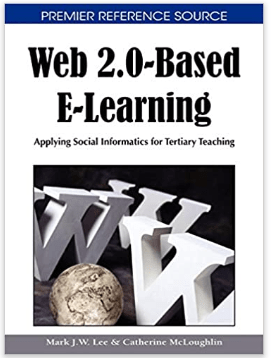
Web 2.0 based elearning: applying social informatics for tertiary teaching. Hershey
Book reviewed: Web 2.0 based elearning

The first section covers emerging paradigms and innovative theories in web-based tertiary teaching since Web 2.0 tools and practices are challenging and redefining scholarship and pedagogy. The idea is that the emergence of new tools by itself will not revolutionise education but its affordances provide the opportunity to: a) create new models for education for the knowledge society and, b) innovate tertiary teaching and learning.

Affordances of Web 2.0 tools are well illustrated through case studies and exemplars of evidence-based practices in section two. As a practitioner, this section was most useful for me. The authors refrain from pushing the technology agenda but address the important decision making questions like what to use, how and when. Pedagogical relevance is emphasised with reference to learners’ digital literacies and personal knowledge management skills and teachers’ capabilities and capacities.The final section addresses the challenges in educational applications of Web 2.0 due to the theoretical gap in literature and concludes with two approaches to harnessing the power of Web 2.0 in education:
1. Applying social web practices to facilitate greater dialogue and sharing of learning and teaching ideas.
2. Using metaphors as a mechanism for understanding educational application of Web 2.0 technologies.
Overall, this book is a great reference for anyone contemplating the use of Web 2.0 tools in education hence a valuable addition to the reading list.

*A second generation, more personalised, communicative form of the World Wide Web that emphasizes active participation, connectivity, collaboration, and sharing of knowledge and ideas among users. Also referred to as the “read/write Web” (Price, 2006; Richardson, 2006).
Managing digital repositories

Digitool, an existing digital repository that is available through the University Library is currently being trialled.  Initially it will be used to store and catalogue a range of digital resources around the teaching themes for use in BIOSCI100 & 100G. The Dublin core is used to standardise the metadata descriptors. In designing the digital repository, the team is mindful of issues around copyright and access.  The project will investigate the potential of this repository as a teaching resource and the practicality of maintaining and building on such a system in the longer term.  It will also consider the long term costs for investment in such a system and likely usage by the staff within the School of Biological Sciences.

Continue reading

Generation “MySpace”

Social networking and its impact on students and education

This was my first overseas seminar since joining the University of Auckland as an academic in Technology Enhanced Learning. The seminar – focused on social networking – began with Dr. Dahle Suggett raising important issues around social networking and its impact on the social and emotional wellbeing of our youth. According to him, social networking begins a new era of cultural management where it becomes essential for educators and school administrators to plan the management of the social aspects of technologies. Many schools and universities end up blocking the access to tools such as ‘YouTube’ and ‘MySpace’. Is this the right approach? How do schools respond to students’ use of advanced technologies?

Affordances of Web 2.0

Keynote by danah boyd
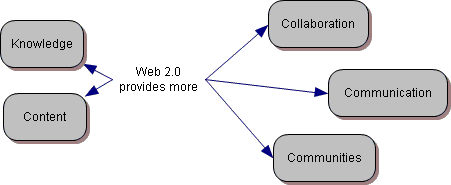
Networked publics concept began with the inception of Usenet in 1979. Web 2.0 has provided more opportunity for networking in the public sphere with the use of modern social networking tools.

Continue reading

eTools for assessment and feedback

Massey University academics present on essay type assessment marking. Their research indicates that:
Lecturers prefer to mark assignments on paper rather than on screen depending on the type of assignments. For especially long essays, paper based reading and marking is preferred.
Specialist software such as Electronic feedback, Grademark, WebCT connect, MarkTool, Creative technology-Markin, Markers assistant, Penmarked or basic tools such as Track changes function on Microsoft Word were being used by some lecturers to mark assignments electronically.
Feedback was the most important aspect of assignments. Comment banks could be developed to provide detailed feedback for each of the assignments.

Good feedback practice (Nicol & Macfarlane‐Dick, 2006):
1. helps clarify what good performance is (goals, criteria, expected standards);
2. facilitates the development of self-assessment (reflection) in learning;
3. delivers high quality information to students about their learning;
4. encourages teacher and peer dialogue around learning;
5. encourages positive motivational beliefs and self-esteem;
6. provides opportunities to close the gap between current and desired performance;
7. provides information to teachers that can be used to help shape teaching.

Continue reading

Good teaching in large classes

In this seminar, experienced teachers of large classes shared their strategies for keeping their classes active and engaging. It’s not about the tools, but how you use them to meet the needs of your learners, staying true to your teaching approach.

References:

McKeachie, W. (1980). Improving lectures by understanding students’ information processing. In McKeachie, W.J. (Ed.), Learning, Cognition, and College Teaching. New Directions for Teaching and Learning, No. 2. San Francisco: Jossey-Bass Publishers.
Learning spaces e-book by EDUCAUSE
Good, M. (2001). On the Way to Online Pedagogy (Chapter 13) in John Stephenson (ed.). Teaching and Learning Online: Pedagogies for New Technologies. [Online]
Lyman, F. (1981). The Responsive Class Discussion. In A. S. Anderson (ed.), Mainstreaming Digest. College Park: College of Education, University of Maryland, 1981. (Think-pair-share technique)
Thiagi, S. (2005). Thiagi’s Interactive lectures: Power up your training with interative games and exercises. USA: ASTD Press.
George Brown (1978). Lecturing and Explaining. London: Methuen. (Peer squares-peer assessment technique)
Shenk, D. (1997) Data Smog: Surviving the Information Glut, San Francisco: HarperCollins.  

Continue reading