Social networking and its impact on students and education
This was my first overseas seminar since joining the University of Auckland as an academic in Technology Enhanced Learning. The seminar – focused on social networking – began with Dr. Dahle Suggett raising important issues around social networking and its impact on the social and emotional wellbeing of our youth. According to him, social networking begins a new era of cultural management where it becomes essential for educators and school administrators to plan the management of the social aspects of technologies. Many schools and universities end up blocking the access to tools such as ‘YouTube’ and ‘MySpace’. Is this the right approach? How do schools respond to students’ use of advanced technologies?
Keynote by danah boyd
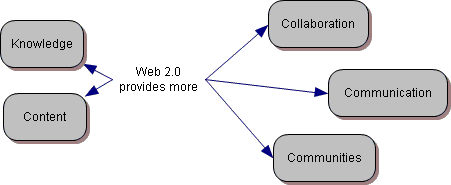
Networked publics concept began with the inception of Usenet in 1979. Web 2.0 has provided more opportunity for networking in the public sphere with the use of modern social networking tools.
The social networking software lets you express who you are even though no one wants to know. It’s a ‘key hang out’ for teenagers and is an ‘egocentric’ approach (e.g. MySpace) to communication. People use these social network tools to reproduce their local communities online because they want access to them.
Features of social network sites:
Profile-every site requires you to build a profile where you give basic demographic information. This can be used to track you down as well so many people choose to use false identities as their profiles to avoid disclosing their real identities. This is one of the coping mechanisms.
Friends-these are people who you have come to know through the web. Although friend has a different meaning in the real world, in the virtual environment, anyone can be called a friend. This is a mere construction of an audience you can communicate with and they are tolerant enough to cope with your self indulgence!
Comments-these are public expressions of conversations and can be private messaging or instant messaging between you and your friends.
Properties of social network sites:
Persistence
Searchability
Replicability
Invisible audiences
These are also the default properties of public life where the replicability function of social networks actually pose a bullying threat.
Coping mechanisms:
Build walls (fictitious information is not searchable so some people use fictitious names and profiles)
Demand social barriers
Be invisible
According to danah, people often talk about the digital divide and how it influences the accessibility of new tools and technologies. In the United States, people have overcome the digital divide so there is more of a participation divide now than ever before. For youngsters to engage in civic life, they have to engage in public life. Policies and practices such as blocking the use of ‘YouTube’ and ‘MySpace’ discourage public participation and engagement among youth. This can lead to negative impact on their civic lives.
Do social network sites have an application in education?
The Keynote was of the view that social networking tools cannot directly be used in education because they are social/public sites. It is difficult to maintain an acceptable standard. However, collaborative learning can be facilitated by tools such as blogs and wikis depending on how they are used in different contexts for different purposes. For instance, a wiki can be used as a cooperative learning tool where true or false information does not matter but it increases students’ ability to do comparative analysis of different sources of information. Particular reference was made to the disciplines of History and Politics.
You must be engaged to be civic. Everyone can be famous for 15 people http://en.wikipedia.org/wiki/15_minutes_of_fame
 Ashwini Datt